Sunday, March 8, 2020

The Flipside of Social Media

Yin and Yang (by Dan Carter, CC BY-NC-SA)

You know what one of my favorite philosophies is? Duality.  Light and darkness, good and evil; you can't have one without the other.  This is also the case with other aspects of life.  For every respectful member of a fandom, there's always that jerk that gets angry because you don't agree with them.  For everyone that can take criticism for their work, there's someone who thinks everything they do is art.  And unfortunately, when it comes to communications technology, for every positive, there's a negative.

Case in point, while modern technology has been able to allow us to connect with people in new and unique ways, it's also allowed people to hurt and abuse people and get away Scot-free.  It's described in better detail in the video "The Dark Side of the Internet", which you can find here, but to summarize, anyone can go online and essentially do whatever they want, and thanks to the power of anonymity, not have to worry about consequences.  To make an example, I could go online right now and create a new account under a false name, and no one would be able to tell it was me, allowing me to go to any site I desire and, well, make fun of or abuse whomever I want.  No one would be able to tell if it was me, and while my online persona would probably get dragged through the mud, my public persona would remain intact unless someone managed to connect the dots.

Plus, just as new technology has introduced new methods for businesses to connect with employees/clientele, so to do other organizations, including terrorist groups.  According to the article "Communications Technology and Terrorism", the advent of satellite and the internet has opened new avenues for terrorist organizations to recruit and connect with potential converts/targets, and Al-Qaeda even "employed the Internet for 'cyberplanning', while the Islamic State of Iraq and Syria (ISIS) publishes online magazines (e.g., Dabiq and Rumiyah) that (i) provide volumes on their ideology, (ii) encourage readers to contribute financially, (iii) teach their followers how to conduct terrorist attacks, and (iv) provide links to assassination videos conducted by their members" (Mahmood, Jetter, 2019).

Put simply, yes, technology has opened many new avenues of exploration and connections that we as a society may take advantage of, but there is always a flipside to these types of scenarios, and we need to be aware of what those may be at times.

References

Mahmood, R., & Jetter, M. (2019). Communications Technology and Terrorism. Journal of Conflict Resolution 2020, vol. 64(1), 127-166, doi: 10.1177/0022002719843989

Image Sources:

[Yin Yang Symbol]. Retrieved from https://www.ancient.eu/Yin_and_Yang/

Anyone Can Make It

For any general audience member who happens to find this blog, did you know that at the time I'm writing this blog post, I'm getting my Master's online?  But of course, you're probably wondering, "Sam, why the Hell are you telling me this?  I'm not here for your life story, I'm here to learn about technology and journalism!"  My response to that is (1), you don't have to be so rude about this, I haven't done anything to you, and (2), I'm bringing this up because the fact that I'm able to attend college to this degree at all shows how far technology has come.


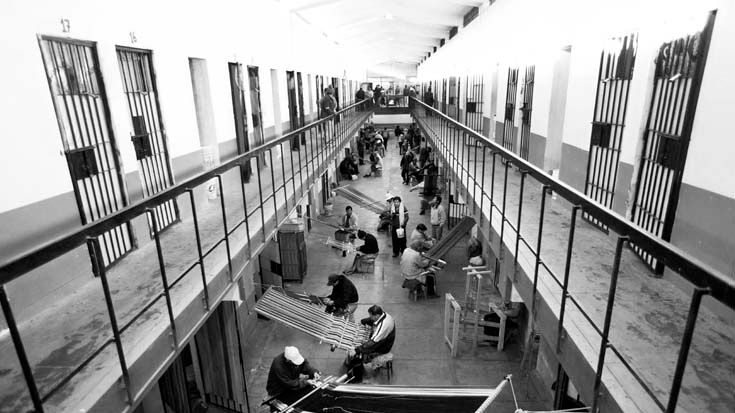
Heck, the fact that you're even reading this post at all shows how far we've come.  And it's not just limited to reading posts either; technology can allow for new kinds of work training.  According to the article "Prisoner use of information and communications technology", a number of programs have been introduced into prison systems that each have roots in new technologies, such as educational programs that "have been found to reduce the likelihood of reoffending and thus improve an offender’s chances of reintegrating into society" (Kerr, Willis, 2018), the institution of virtual campuses, such as what I mentioned above (see, I know what I'm doing sometimes), and the advent of these technologies has "also enabled correctional departments to improve and broaden the employment programs available in correctional facilities" (Kerr, Willis, 2018).

Image

To sum it up, the use of technology can not only connect us in new ways, but it can also open new opportunities for people, and allow them to do things and work in areas that they would never have been able to do.

References

Kerr, A., & Willis, M. (2018). Prisoner use of information and communications technology. Trends & issues in crime and criminal justice, (560), 1-19.

Image Sources:

[Career School Now]. Retrieved from https://careerschoolnow.org/careers/online-college

Bank, W. (2014). Inmates at Quencoro Penitentiary make textiles. [Photo]. Retrieved from https://www.worldbank.org/en/news/feature/2014/03/12/peru-trabajar-desde-la-prision-una-salida-para-miles-de-reclusos-en-latinoamerica

Why Skynet's Already Won


Don't worry, I'm not saying the machine's have taken over the world.  But I will say that it wouldn't take much effort for them to try.

Let's be honest people; machines are everywhere!  Every day, we carry portable computers in our pockets that not only play our music, but allow us to call friends and family, check the whether, and play games.  On top of that, they can also keep track of our schedules, where we go, what sites we visit, need I go on?  Technology has invaded every facet of our lives, and as a consequence, drastically altered how we go about our days.

Sam Dolnick, who oversees digital initiatives at The New York Times, likes to read several email newsletters at home in the morning.

To give an example, let's look at the article "Tapping Technology to Advance the Future of Journalism".  In said article, the author, Sam Dolnick, lists off various ways that technology has affected his daily routine, including how he checks his phone every time he wakes up (something we all do, admit it!), checks his email, reads the NY Times Newsletter and Opinions pages, and finally how his daughter "will usually ask Alexa to play a terrible song — the democratization of music choice is one of the untold perils of the modern era. Then, Alexa will thankfully interrupt with an alarm that it’s time to leave for the bus" (Dolnick, 2018).

He further goes on to state that with the advent of digital tech, the Times has continued to grow and change, including pushing into virtual reality, making a visual first edition of the Times for Instagram users, and even delving into audio journalism (Dolnick, 2018).  Put simply, as technology has continued to grow and change, so to has our uses for it.  It has become a major part of our lives, and even if you refuse to change with the times, you're still ingratiated in this world, whether you like it or not.

References

Dolnick, S. (2018). Tapping Technology to Advance the Future of Journalism. The New York Times. Retrieved from https://www.nytimes.com/2018/01/03/technology/personaltech/technology-future-journalism.html

Image Sources:

[Skynet Cyberdyne Systems Corporation Logo]. Retrieved from https://www.textualtees.com/products/skynet-t-shirt

[Sam Dolnick checking his phone]. Retrieved from https://www.nytimes.com/2018/01/03/technology/personaltech/technology-future-journalism.html