Over the years, technology has become a more prominent aspect of our lives, whether we like it or not. With advances in technology coming as far as they have, the ways we perform our every day tasks has continued to change and advance as well, especially in journalism and communications. Even before we had our modern amenities, technology has always continued to grow, as well as how we've integrated it into our everyday lives. For example, let's take the Wayback machine and go back to the early 1900s, specifically, to the world of film. According to the article "Exhibitors, Technology, and Industrial Journalism in The 1910s and 1920s", Industrial Journalism continued to grow and change with the time. In fact certain individuals, such as entrepreneur Horace M. Swetland claimed that "The basic purpose of Industrial Journalism is to assist in the production and distribution of commodities" (Swetland, 1923). Essentially, journalism wasn't just there to inform, but "through lectures, books, and organizational activities, Swetland and the nation’s other leading business publishers sought to legitimize their profession and argue for its importance to American industry" (Hoyt, 2015).
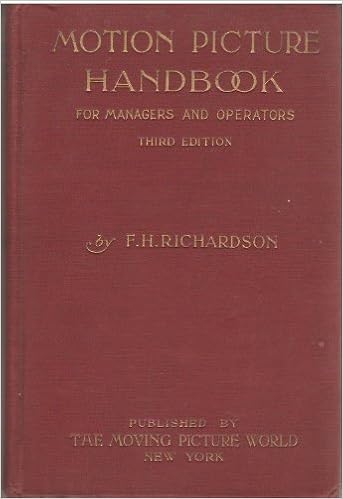
They did this through various means, specifically, as the article mentions, three industrial periodicals called technical, class and trade. Technical journals were mainly used for "disseminating technical knowledge, legitimizing the organization, and policing the boundaries between insiders and outsiders" (Hoyt, 2015). In fact, technical journals were used as a means of instructing people on how to use and operate technologies, with an example being the "Motion Picture Handbook for Managers and Operators" (pictured above). This was actually a collection of articles that the author, F. H. Richardson, had published for Moving Pictures World, and over the years, such articles were eventually brought together in other publications for handy use and reference, including Accessory News, Better Theatres which was published by the Exhibitors Herald, all of which have been digitized for online use. In fact, according to the article, with the aid of the search engine of the MHDL, Lantern, "a researcher can type in “arc lamp” and almost immediately generate hundreds of matching results. This is the power of a digital search index, which organizes data in a way that
allows them to be quickly queried and retrieved" (Hoyt, 2015).
I will go into more detail about the evolution of technology in future posts, but as you can see, how we disseminated information, and how we retrieved it, have changed over the years. What we once had to look up in a written article we can now find online. It may still take time, but thanks to our modern world, this information is always quick to come by. To further discuss how technology has become more integrated into our lives, I recommend checking out the article Tapping Technology to Advance the Future of Journalism by Sam Dolnick, as I feel this can give us a window into how we ourselves use it. For my next post, I will discussing how the integration of social media has affected how we retrieve information, both for news gathering, and for the news itself.
References
Hoyt, E. (2015). Exhibitors,
Technology, and Industrial Journalism in The 1910s and 1920s. Velvet Light Trap, 76. 49-53.
Image Source [Motion Picture Handbook for Managers and Operators (Third Edition) by F.H. Richardson] Retrieved from https://www.amazon.com/PICTURE-HANDBOOK-Managers-Operators-Theatres/dp/B002N4GEO2

No comments:
Post a Comment